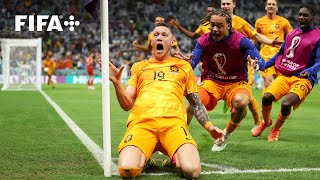
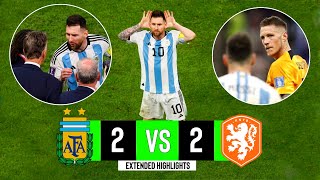
Holanda vs Argentina 2022: A World Cup Showdown
The clash between the Netherlands (Holanda) and Argentina in the 2022 FIFA World Cup captured the imagination of football fans worldwide. Both nations arrived in Qatar with distinct styles, seasoned veterans, and a hunger for glory. The encounter, played on December 9, 2022, was a quarter‑final that blended tactical nuance with moments of pure drama, ultimately shaping the path to the tournament’s final.
Road to the Quarter‑Final
Before meeting in Qatar, each side had already proved its mettle in the group stage and the round of sixteen.
- Argentina topped Group C, edging out Saudi Arabia, Mexico, and Poland with a blend of attacking flair and disciplined defending. Lionel Messi’s leadership was evident, as he contributed both goals and assists.
- Netherlands finished second in Group A behind Qatar’s host nation, but a decisive 2‑1 victory over the United States in the round of sixteen secured their place in the quarter‑finals.
Both teams entered the match with a single loss each, setting the stage for a tightly contested battle.
Key Players to Watch
The fixture promised a showdown of world‑class talent. Below are the players who most influenced the outcome.
- Lionel Messi (Argentina) – The Argentine captain’s vision and free‑kick prowess remained a constant threat.
- Julián Álvarez (Argentina) – The young striker’s pace and movement created space for his teammates.
- Virgil van Dijk (Netherlands) – The Dutch centre‑back anchored the backline with composure and aerial strength.
- Frenkie de Jong (Netherlands) – His ability to transition quickly from defense to attack added a dynamic edge.
Match Overview
The game began with Argentina pressing high, seeking to exploit the Netherlands’ occasional vulnerability to quick transitions. In the 23rd minute, Messi curled a free‑kick from just outside the box, forcing a spectacular save from Dutch goalkeeper André Onana. The early exchanges were balanced, with both sides creating half‑chances but failing to convert.
The deadlock was broken in the 45th minute. A swift Dutch counter‑attack saw Memphis Depay receive a low pass from De Jong, dribble past two defenders, and unleash a shot that struck the post. The rebound fell to Steven Bergwijn, whose header found the net, giving Holanda a 1‑0 lead just before halftime.
Argentina emerged from the break with renewed vigor. In the 58th minute, Messi delivered a precise through‑ball to Álvarez, who slotted home the equaliser. The goal sparked a surge of Argentine attacks, but the Dutch defense held firm, relying on Van Dijk’s experience to clear danger.
The decisive moment arrived in the 84th minute. A corner kick taken by Messi was met by Ángel Di María, whose towering header forced a scramble in the Dutch penalty area. The ball fell to Julián Álvarez, who tapped the ball into the net for his second goal of the tournament, sealing a 2‑1 victory for Argentina.
Tactical Analysis
Both coaches employed strategies that reflected their teams’ identities.
- Argentina’s approach focused on possession and high pressing. Messi’s role as a deep‑lying playmaker allowed the team to overload the midfield, while the wingers stretched the Dutch backline, creating gaps for the forwards.
- Netherlands’ game plan emphasized compact defending and rapid transitions. Van Dijk organized a three‑man defensive block, while De Jong and Depay acted as the primary conduit for counter‑attacks.
The match highlighted the importance of set‑pieces. Argentina’s free‑kick routine, led by Messi, generated two of their three scoring opportunities, whereas the Netherlands capitalized on a corner to take the lead. In the final minutes, Argentina’s superior aerial presence, particularly from Álvarez, proved decisive.
Impact and Legacy
Argentina’s triumph over Holanda propelled them into the semi‑finals, where they faced Croatia before ultimately reaching the final against France. The victory reinforced Messi’s status as a tournament‑defining player, adding a crucial chapter to his illustrious career.
For the Netherlands, the loss was a bitter disappointment but also a sign of progress. Their performance against a world‑class Argentine side demonstrated the depth of talent in the Dutch squad and hinted at a promising future under the guidance of coach Louis van Gaal. The experience gained by younger players such as De Jong and Bergwijn is expected to benefit the team in upcoming international competitions.
Beyond the pitch, the match sparked intense debate among fans and analysts. Discussions centered on the effectiveness of Argentina’s high‑press versus the Netherlands’ disciplined defensive shape, as well as the influence of individual brilliance versus collective organization. The game also underscored the global appeal of football, drawing viewers from every continent and reinforcing the World Cup’s role as a unifying sporting event.
Key Takeaways
- Argentina’s resilience and ability to score late