Moon With Rainbow Ring Meaning: An Overview
The sight of a luminous moon encircled by a faint, multicolored halo has fascinated observers for centuries. While the phenomenon is rooted in atmospheric physics, it also carries a rich tapestry of cultural symbolism. Understanding both the scientific basis and the layers of meaning that people attach to a moon with rainbow ring can deepen the experience of this rare sky event.
What Is a Lunar Halo?
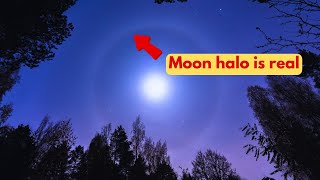
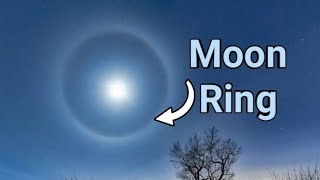
A lunar halo is a circular band of light that appears around the full or near‑full moon. The most common form is a 22‑degree halo, which looks like a thin, white ring. When conditions are right, the halo can display subtle colors—reds on the inner edge and blues on the outer—creating a faint rainbow effect. This colored version is often described as a “rainbow ring” and is less frequent than the plain white halo.
Scientific Explanation of the Rainbow Ring
The halo forms when moonlight encounters tiny ice crystals suspended in high, thin clouds such as cirrostratus. Light is refracted, or bent, as it passes through the crystals. Because ice crystals are hexagonal, the refraction angle is typically around 22 degrees, producing the classic halo. When the crystals vary in size or orientation, the light can be split into its component colors, much like a prism, resulting in a delicate rainbow hue. The effect is most noticeable when the moon is bright and the sky is dark enough for the faint colors to stand out.
Cultural and Historical Interpretations
Across the globe, a moon surrounded by a rainbow ring has been woven into myths, omens, and artistic expressions. Some of the most notable interpretations include:
- Ancient Greece: The halo was linked to the goddess Selene, symbolizing a protective veil around the moon.
- Native American traditions: Certain tribes saw the rainbow halo as a sign of balance between the earthly and spiritual realms.
- East Asian folklore: In Chinese astronomy, a colored lunar halo was sometimes regarded as a herald of change, urging people to prepare for upcoming shifts in weather or fortune.
- European medieval lore: The appearance of a rainbow ring was occasionally recorded in chronicles as an omen of impending storms or political upheaval.
While these stories differ, a common thread is the perception of the halo as a bridge between the heavens and the world below, often imbued with warning or blessing.
Modern Symbolism and Personal Significance
In contemporary culture, the moon with rainbow ring is frequently used as a visual metaphor for hope, unity, and the blending of opposites. Artists and designers incorporate the image into logos, tattoos, and digital art to convey concepts such as:
- Harmony between light and darkness.
- The fleeting beauty of rare moments.
- A reminder that even familiar celestial bodies can surprise us with new colors.
For many individuals, witnessing a rainbow halo becomes a personal milestone—a moment that encourages reflection on cycles, transitions, and the interconnectedness of natural phenomena.
How to Observe and Photograph a Moon Halo
To increase the chances of seeing a lunar halo, keep an eye on weather forecasts that predict high, thin clouds after a clear night. When the moon is near full, step outside after sunset and look toward the horizon. The halo will appear as a faint circle surrounding the moon, often best seen with the naked eye rather than through a telescope, which can obscure the delicate colors.
Photographers can capture the effect by using a tripod, a wide‑angle lens, and a moderate exposure. A low ISO (100‑400) and a shutter speed of a few seconds usually suffice. Slightly underexposing the image can help preserve the subtle color gradients that might otherwise be washed out.
When to Expect a Rainbow Ring Around the Moon
The occurrence of a colored lunar halo is not tied to a specific season, but it is more likely during times of high humidity and cold temperatures, when cirrostratus clouds are common. Meteorological services that track cloud types can provide hints, and astronomy forums often share recent sightings. Because the phenomenon depends on the random alignment of ice crystals, it remains unpredictable, adding to its mystique.
Conclusion
A moon with rainbow ring merges the realms of science and symbolism. Its formation is a straightforward interaction of light and ice, yet the visual impact resonates with centuries of human storytelling. Whether viewed as a natural curiosity, a cultural omen, or a personal emblem of wonder, the rainbow halo invites observers to pause,